
Hatsune Miku & Piapro Characters · Figure guide
Kagamine Len Figure
Kagamine Len’s voice can tell a story that his familiar yellow-accented costume does not explain on its own. A producer may give him the lead in a dramatic narrative, write him into a duet or build a song around the energy of his performance.
Len figures come from that wider creative life. The original singer, a theatrical role and an artist’s casual portrait can all be recognizable as Len, while belonging to separate works. Their differences begin with the music or illustration behind the appearance.
Story and characterFigure selection
Casual scene by lack
Prime 1 Studio · Prisma Wing · Art by lack
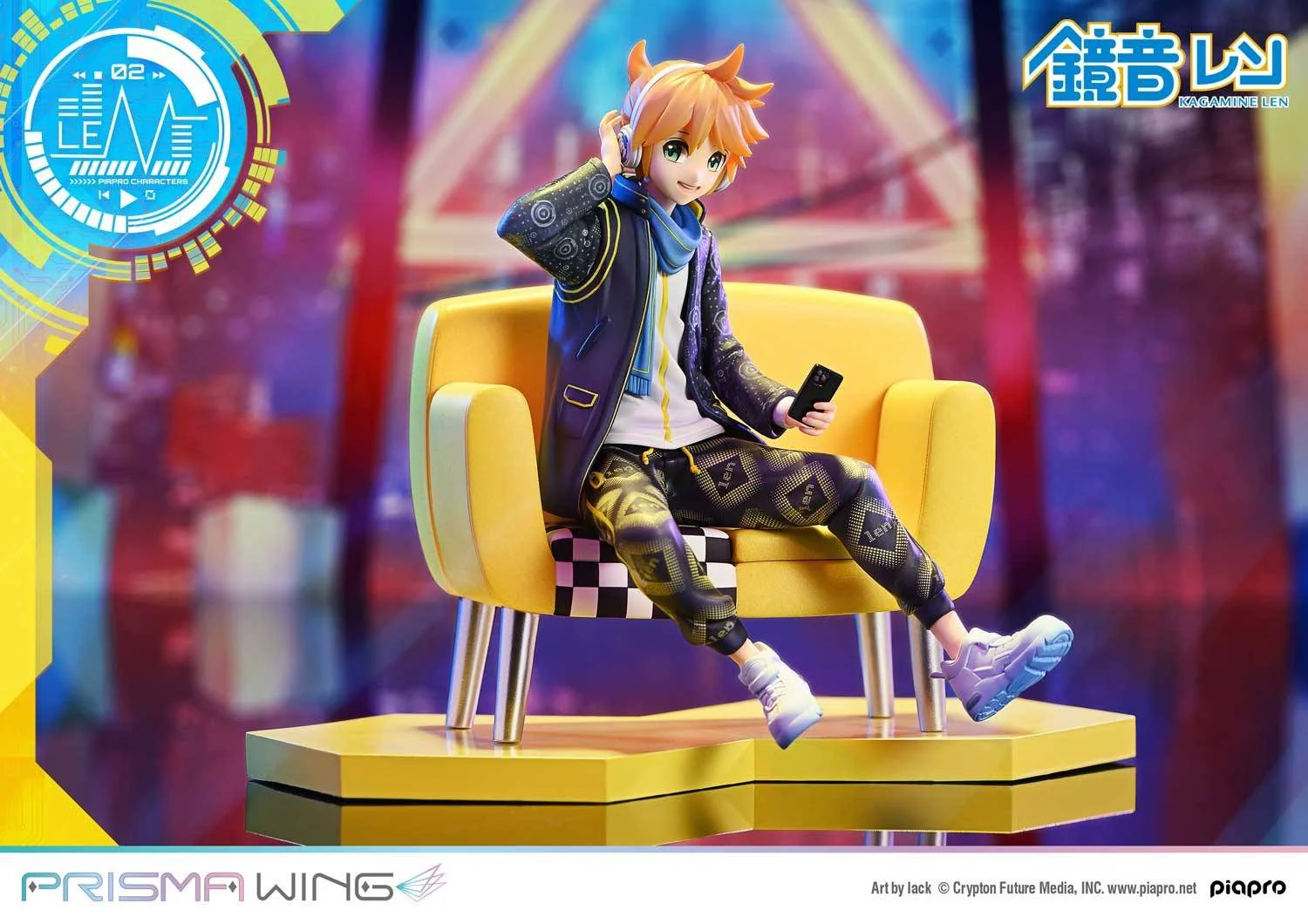
Prisma Wing Len 1/7
View this figureLen’s casual clothes and yellow chair form a relaxed, fixed 1/7 composition.
Prisma Wing includes the chair as part of the scene. Compare the complete dimensions, including the base, with the space available.
Len 2.0 Nendoroid
Good Smile Company · Nendoroid 2841
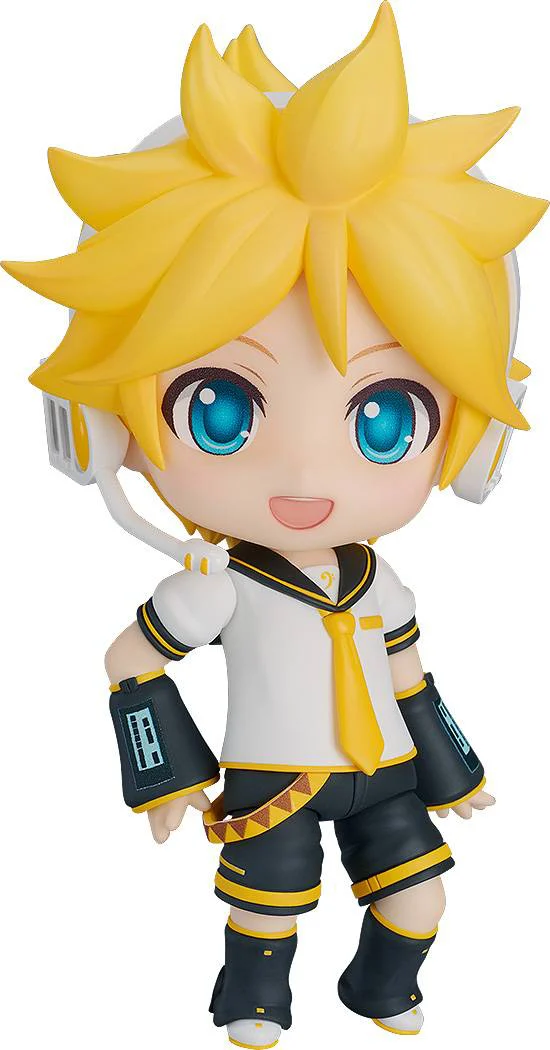
Nendoroid 2841 Len 2.0
View this figureHis familiar costume and tied-back blond hair in the compact Nendoroid format.
Release 2841 has its own faces, hands and supports. Use those contents when deciding which expression or pose to display.
Seated Look Up Len
MegaHouse · Look Up

Look Up Kagamine Len
View this figureA small Len with an upward-looking face, in the same format as Look Up Rin.
The body keeps its seated pose. If you want the pair, compare the two Look Up releases and the space for their bases together.
Story and character
A voice introduced alongside Rin
Len debuted with Kagamine Rin in Crypton Future Media’s December 2007 software release. Both voices use recordings by Asami Shimoda. The producer chooses notes, words and expression to turn those recordings into a vocal performance.
His short blond hair, tied-back section and yellow details give him an identity within the pair. He shares a release history with Rin without requiring her presence in every song. A solo work can let his voice carry an entire account.
Their association also gives duets a particular familiarity. Hearing the voices respond to one another can make a new song feel connected to earlier performances, even when its characters and setting are different. What carries across is the singers; the story can begin again.
The Servant of Evil is a particular part
In mothy’s The Servant of Evil, Len takes a role within the same fictional world as Rin’s The Daughter of Evil. The servant’s appearance belongs to that narrative, giving the costume a connection beyond a change of concert clothes.
This is one reason a song title matters when a virtual singer appears in a different design. It identifies a work in which the familiar performer has been given another name, situation or responsibility. That context helps explain the mood of the portrayal.
It does not establish a single biography for every Len appearance. Other producers can write him into unrelated stories, and an illustration can present him outside any narrative at all. Treating these works separately preserves the contribution each creator has made.
A performer with room for different moods
Len’s musical identity is shaped by more than the outline of his original costume. A forceful phrase, a pause or a restrained delivery can change how a listener understands a song. The same voice can support excitement and vulnerability without becoming a different singer.
Illustrators make related choices about expression and setting. Casual clothing can suggest time away from the stage; a formal costume can place him within a performance. Either can preserve a connection to Len without imitating the software packaging.
Len’s appearance is a starting point rather than a complete account of his roles. Following the song or artist behind a design reveals which part of his creative history it carries.