Final Fantasy VII · Figure guide
Sephiroth Figures
Before Cloud pursues Sephiroth across the planet, he grows up wanting to be like him. Shinra’s celebrated SOLDIER is the example of strength and success that makes leaving Nibelheim seem worthwhile. The return of that same hero to the village destroys the life Cloud imagined.
Sephiroth figures draw on the long silver hair, black coat and Masamune associated with him across Final Fantasy VII. Behind that composed appearance is a fall whose consequences extend far beyond his conflict with Cloud.
Story and characterFigure selection
Legacy
PLAY ARTS VOL. 2

Sephiroth Play Arts Vol. 2
See the original-game Sephiroth figureThe older Play Arts figure keeps the long coat, silver hair and extended Masamune in a familiar original-game design.
Check the condition and contents of this older release. The sword stretches far beyond the body, so allow room at either side of the pose.
Original VII
BRING ARTS
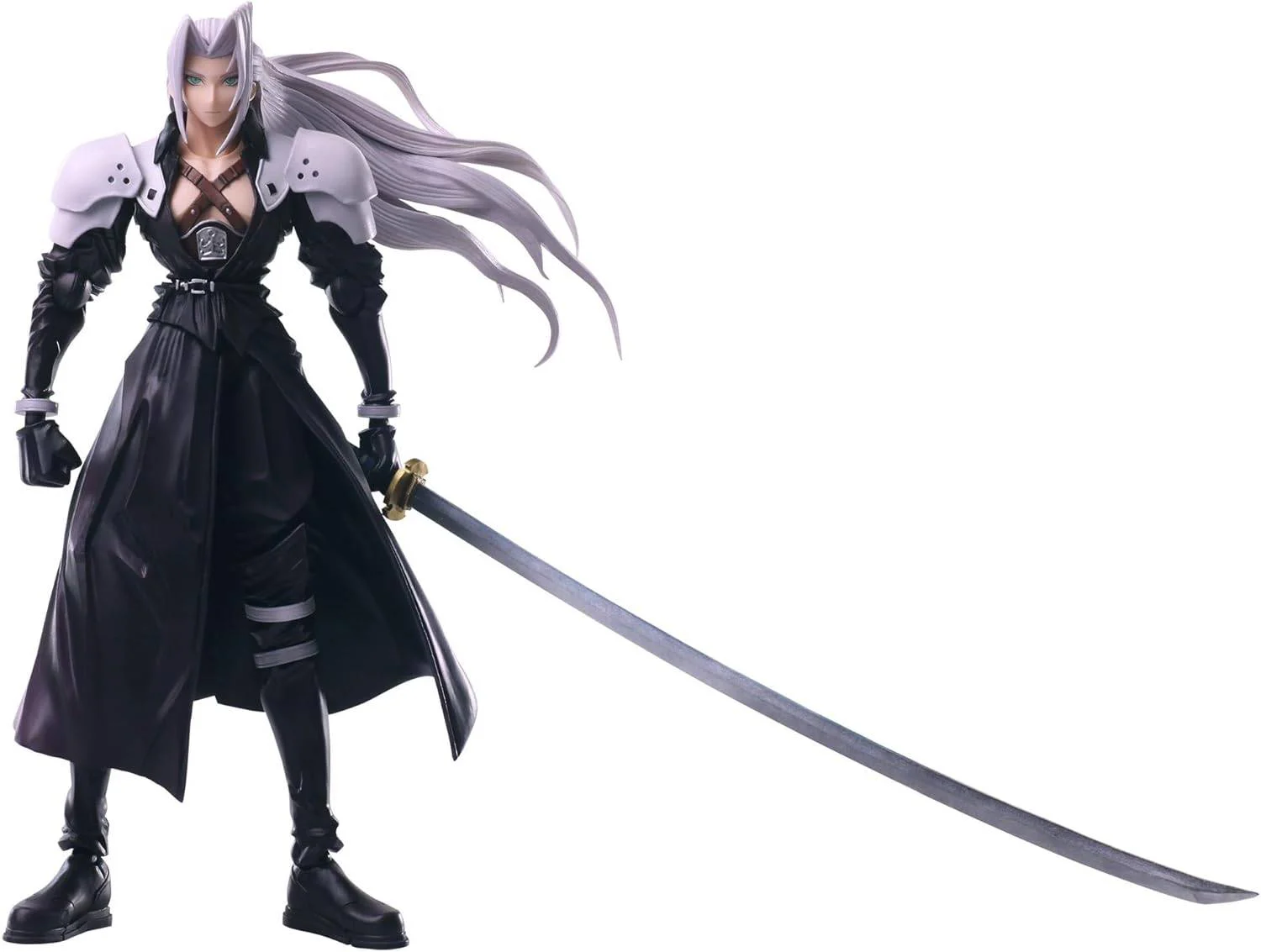
Sephiroth Bring Arts — Reissue
See the Sephiroth Bring ArtsSwept silver hair, a fitted black coat and Masamune recreate Sephiroth’s classic Final Fantasy VII design in Bring Arts.
Square Enix identifies this sculpt with the original game. The shop title says Remake, but the matching product code confirms the classic design.
Winged
SMASH BROS. AMIIBO

Sephiroth amiibo — Smash
See the Sephiroth amiiboA single black wing spreads behind Sephiroth as he stands with Masamune on the Super Smash Bros. amiibo base.
The pose is fixed. Check the wing’s width for your shelf, and consult the intended game’s amiibo support if you also want to use the figure in play.
Story and character · Original game spoilers
The hero on the Nibelheim mission
The reactor inspection at Mount Nibel begins as an assignment for Shinra. In the flashback, Sephiroth fights with the ease expected of a renowned SOLDIER, while Tifa guides the party through terrain she knows.
That earlier standing matters to the catastrophe that follows. Cloud and Tifa are confronting someone their world has taught them to admire. His reputation gives the visit an initial promise that makes the destruction of Nibelheim more personal.
The name Jenova
Shinra’s research and the records Sephiroth studies bring his own origins into question. Jenova becomes central to the account he constructs of himself, and his response turns him against the people around him.
He is later believed to have died at Nibelheim, yet his reappearance draws Cloud and the others into a new pursuit. Following him means confronting both the threat to the planet and the influence he continues to exert over Cloud. Their encounters repeatedly pull the past into the present.
Masamune and the black wing
Masamune’s extraordinarily long blade is part of Sephiroth’s familiar fighting image. Its narrow line, his long coat and his silver hair give the character a very different outline from Cloud with the broad Buster Sword.
Later portrayals also make a single black wing part of his appearance, including his entry in Super Smash Bros. Ultimate. The wing identifies a particular interpretation of Sephiroth within that wider visual history. It does not replace the SOLDIER whose fall begins at Nibelheim.
The composed swordsman and the fallen hero are parts of the same history. Remembering his earlier reputation gives his later appearances their connection to Cloud and Tifa.