
Sonic the Hedgehog · Figure guide
Sonic Figure
Sonic runs toward trouble when someone else’s freedom is at stake. His speed makes that possible, but his impatience with bullies gives him a reason to use it. Dr. Eggman keeps building machines to bring the world under his control; Sonic keeps finding a way through them.
Sonic figures bring together appearances from different parts of that history. The rounded early design, the longer-limbed hero of Sonic Adventure and the golden Super Sonic each have a place in the games.
Story and characterFigure selection
Arcade
Sonic the Fighters
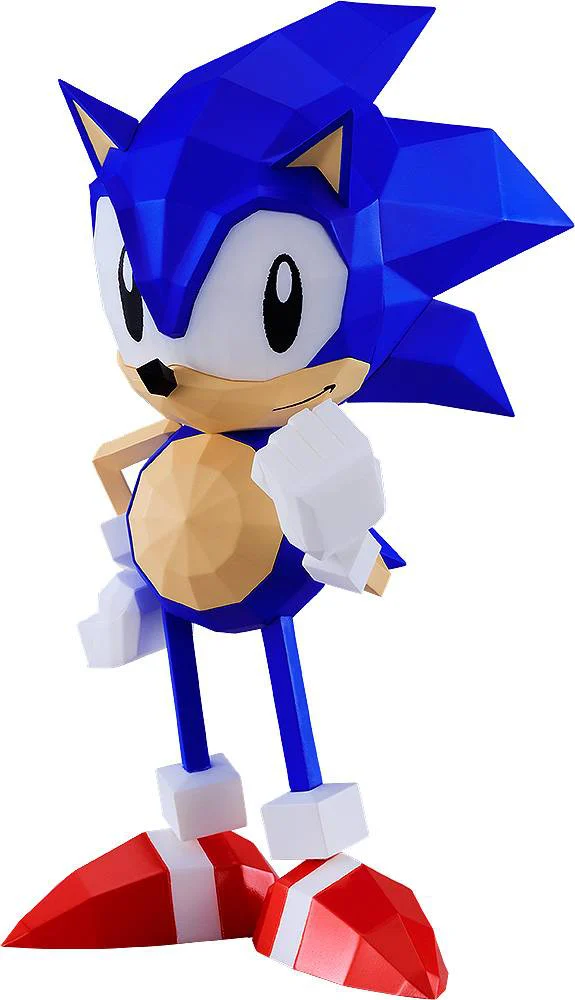
Sonic the Fighters — POP UP PARADE
See Sonic POP UP PARADEFaceted quills, angular shoes and a rounded classic face reproduce the low-poly look of the 1996 arcade fighter.
The pose is fixed, with the geometric surfaces doing much of the work. Pick this for a shelf inspired by early 3D games, and check the base in the gallery.
Poseable
Nendoroid 214

Sonic — Nendoroid 214
See Sonic Nendoroid 214Green eyes, longer quills and movable joints give modern Sonic a range of expressions through his stance.
This is the reissue of Nendoroid 214. Check its hands, expressions and support for the pose you want; the standing, raised-finger photo shows one arrangement.
Super form
PalVerse Palé

Super Sonic — PalVerse Palé
See Super Sonic PalVerseGold coloring, upward quills and red eyes capture the transformation, surrounded by sculpted effects.
Bushiroad builds the fixed figure into a paint-themed base. Compare its complete footprint with the simpler POP UP PARADE and allow space around the effects.
Story and character
The attitude behind the speed
Sonic values the freedom to go where he wants and live by his own judgment. He can be impatient and casually confident, yet someone in difficulty can still make him stop. That combination keeps his adventures from becoming a race with no reason to finish.
His rivalry with Eggman gives that outlook a recurring opponent. In the original Sonic the Hedgehog, freeing animals trapped inside robots is part of crossing the island. Breaking the machines has a purpose the player can see each time a small creature escapes.
Classic Sonic and the move into 3D
Classic Sonic has a rounder body, shorter limbs and black eyes. The later design stretches the silhouette, lengthens the quills and gives him green eyes. His red shoes and white gloves carry across the change, keeping him recognizable as the series moves between visual styles.
Sonic Generations brings the two designs into the same adventure. Their meeting lets the games’ different approaches to movement exist side by side: the compact hero associated with the earlier platformers and the Sonic shaped by later 3D adventures.
Why Super Sonic turns gold
The seven Chaos Emeralds allow Sonic to become Super Sonic. His body glows gold, his quills rise and he gains the ability to fly. Maintaining the transformation consumes a great deal of energy, so it is a temporary state.
In Sonic Adventure 2, Sonic and Shadow take on their Super forms together for the final battle. The appearance belongs to a moment when their rivalry gives way to a shared task. The gold coloring recalls the power of the Emeralds and the circumstances that make Sonic draw on it.
A Sonic figure can bring back the movement and attitude of a particular game. Knowing where the design comes from gives the familiar shoes, quills and Super form their place in the adventure.