
Hatsune Miku & Piapro Characters · Figure guide
Hatsune Miku Figure
Hatsune Miku’s songs begin with people writing for her. A producer supplies the melody and lyrics, an illustrator gives the music an image, and another creator may turn it into an animation. The turquoise-haired singer connects their work, even when each song imagines a different world around her.
That exchange explains the variety of Hatsune Miku figures. A concert costume, a winter design and an artist’s illustration can all represent Miku without belonging to successive chapters of one story. The connection is the work that brought each appearance into being.
Story and characterFigure selection
Magical Mirai 2025 costume
Design Coco · Magical Mirai 2025 · 1/7
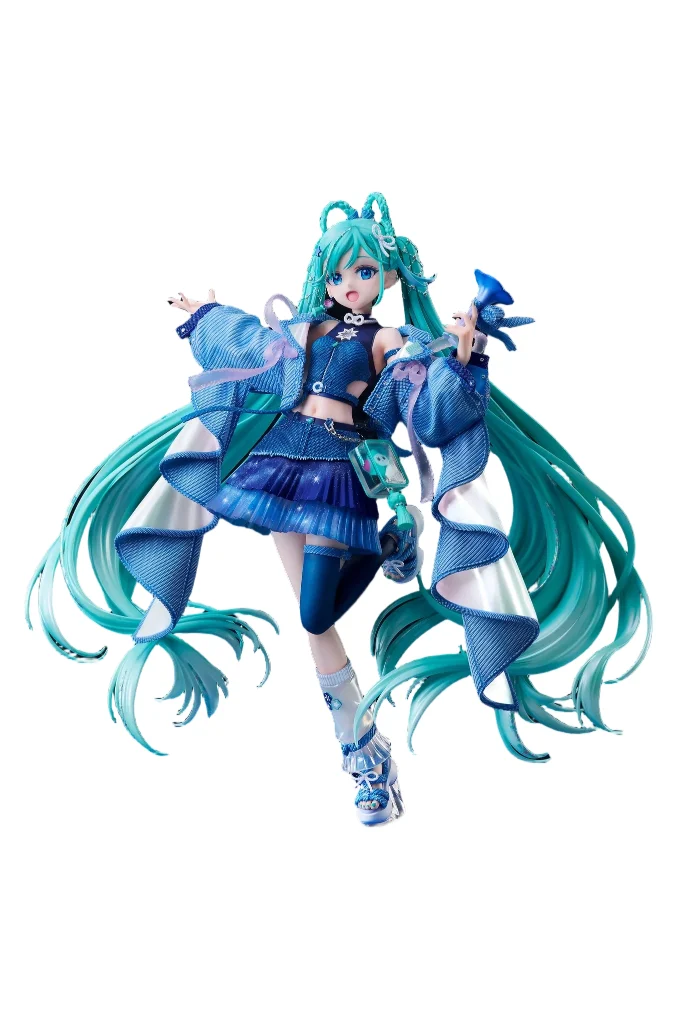
Design Coco Magical Mirai 2025
View this figureFlowing sleeves and turquoise twin tails frame the blue-and-white concert outfit.
The Design Coco sculpture recreates the 2025 design. Compare the full pose and base with other Magical Mirai years if you collect the concert costumes.
Dress and blue crystal effects
Shibuya Scramble · Crystal Dress · 1/7
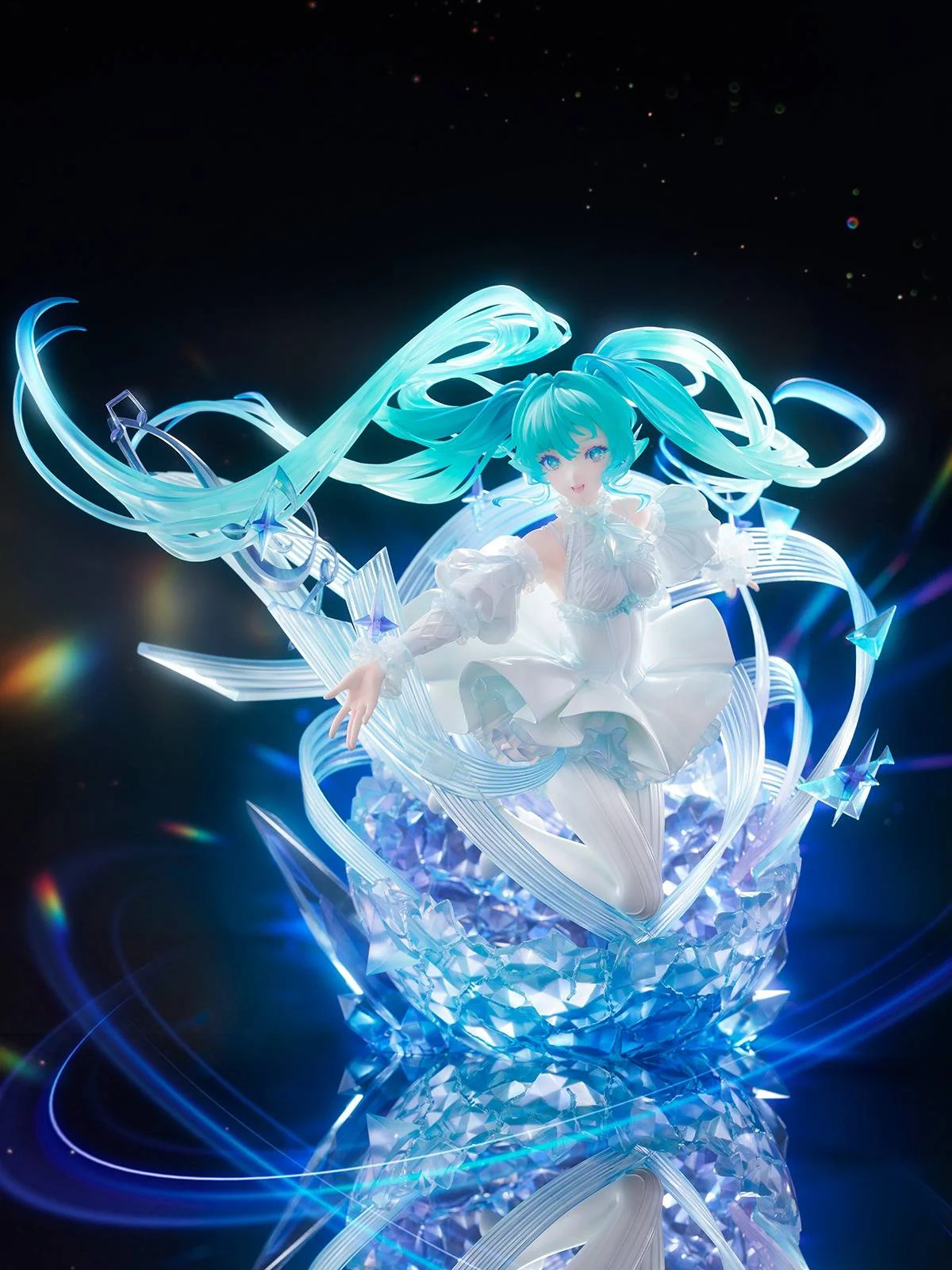
Shibuya Scramble Crystal Dress
View this figureA pale dress, sweeping hair and blue crystal-like forms create an elaborate scene around Miku.
The surrounding effects are a large part of this composition. Use the full gallery and overall dimensions to judge how it will sit beside your other figures.
Bright anniversary design
Kaiyodo · 17th Anniversary · 1/7
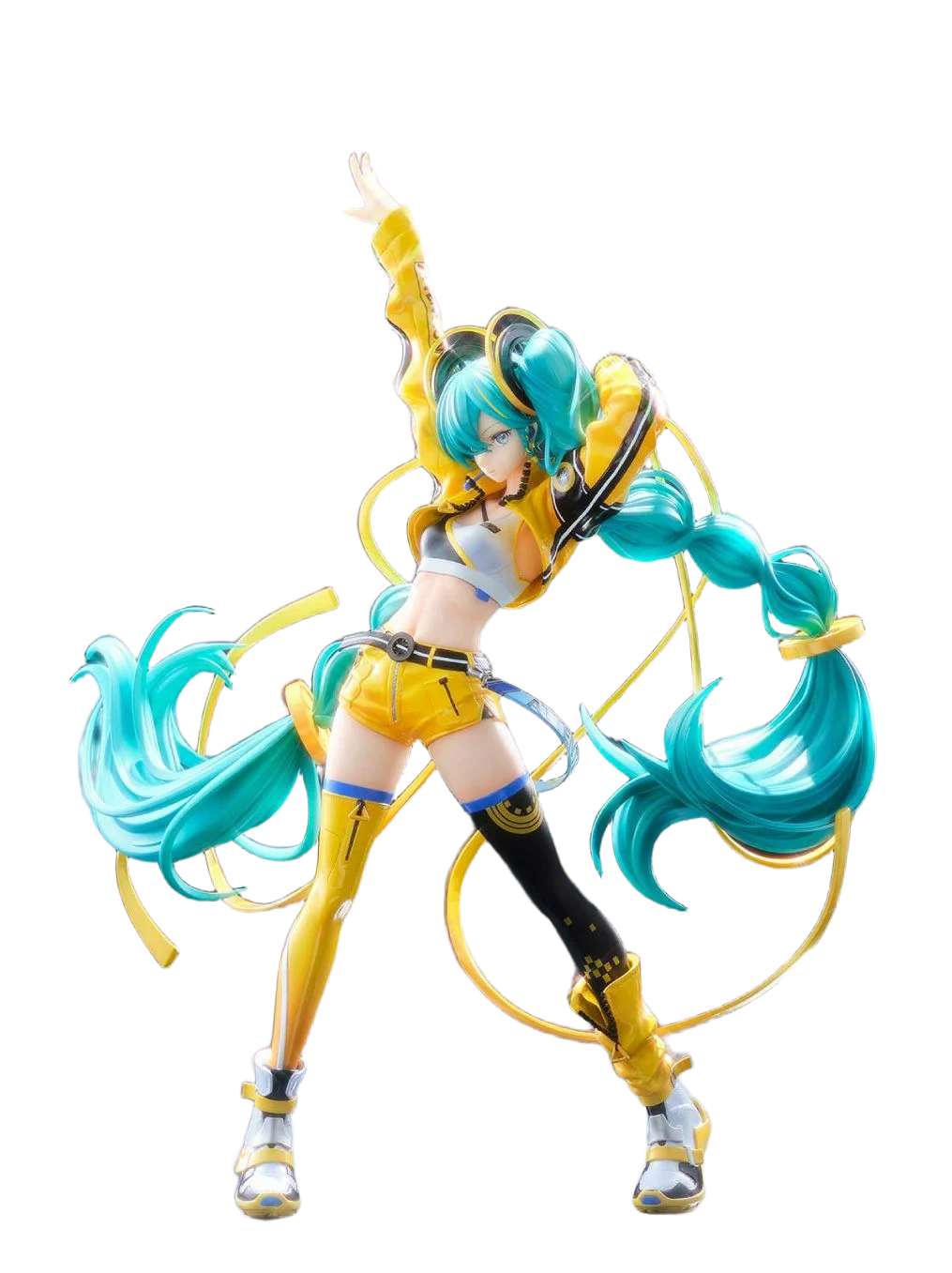
Kaiyodo seventeenth anniversary
View this figureA yellow-and-dark outfit and one raised arm give this Miku a lively, open pose.
This Kaiyodo 17th Anniversary listing is the Limited Edition. Allow space around the extended hair and pose as well as beneath the base.
Story and character
The voice that became a character
Crypton Future Media introduced Hatsune Miku in August 2007 as singing voice software, using recordings by Saki Fujita. KEI’s character illustration gave the voice a face, with long twin tails and a costume drawing on the appearance of music technology.
The software lets a creator build a vocal performance from notes and words. The music still requires composition, arrangement and choices about expression. Miku can sound confident, fragile or playful because different musicians write and shape different performances for her.
Songs and illustrations began circulating together, with creators responding to one another’s ideas. The character could remain recognizable while taking on a new role in each work. Her growing visual history comes from those contributions, rather than a single author deciding what happens to her next.
A concert gives the songs a shared occasion
Live events bring that work into a room with musicians and an audience. Magical Mirai combines a concert with an exhibition devoted to the creative culture around Miku and the other Piapro Characters.
Its annual visual identity gives an event a recognizable costume and theme. Remembering one of those designs can mean remembering a particular show or a group of songs heard together, rather than simply preferring one color of dress.
That is why an event name can be meaningful on a Miku figure. It places the appearance within a project with its own artwork and creative contributors. The figure preserves a connection to that occasion even after another concert introduces a new design.
Snow Miku and other ways her image grows
Snow Miku grew from a snow sculpture at the 2010 Sapporo Snow Festival and became a character supporting Hokkaido. Winter clothing belongs to that regional connection. Sakura Miku instead draws on spring, cherry blossoms and cherries.
Illustration-based designs work in a similar way: the artist’s contribution is part of the subject. Clothing, expression and setting may come from that particular image. Recognizing its origin explains a change of appearance more usefully than trying to fit every Miku into one fictional timeline.
A Miku collection can follow the music, the events or the artists whose work first made her memorable. Those connections remain even as new songs and designs give the same singer another setting.